Verrucae & Plantar Warts
About the condition
Verrucae are viral skin lesions caused by the human papillomavirus (HPV), typically acquired through minor breaks in the skin in shared damp environments — swimming pools, changing rooms and gym floors. They are common in school-age children and young adults, but occur at any age.
The immune system clears many verrucae spontaneously over months or years. Others are stubborn, painful or spreading, and warrant active treatment. Traditional options — freezing, acids, needling — can be uncomfortable, slow and unreliable.
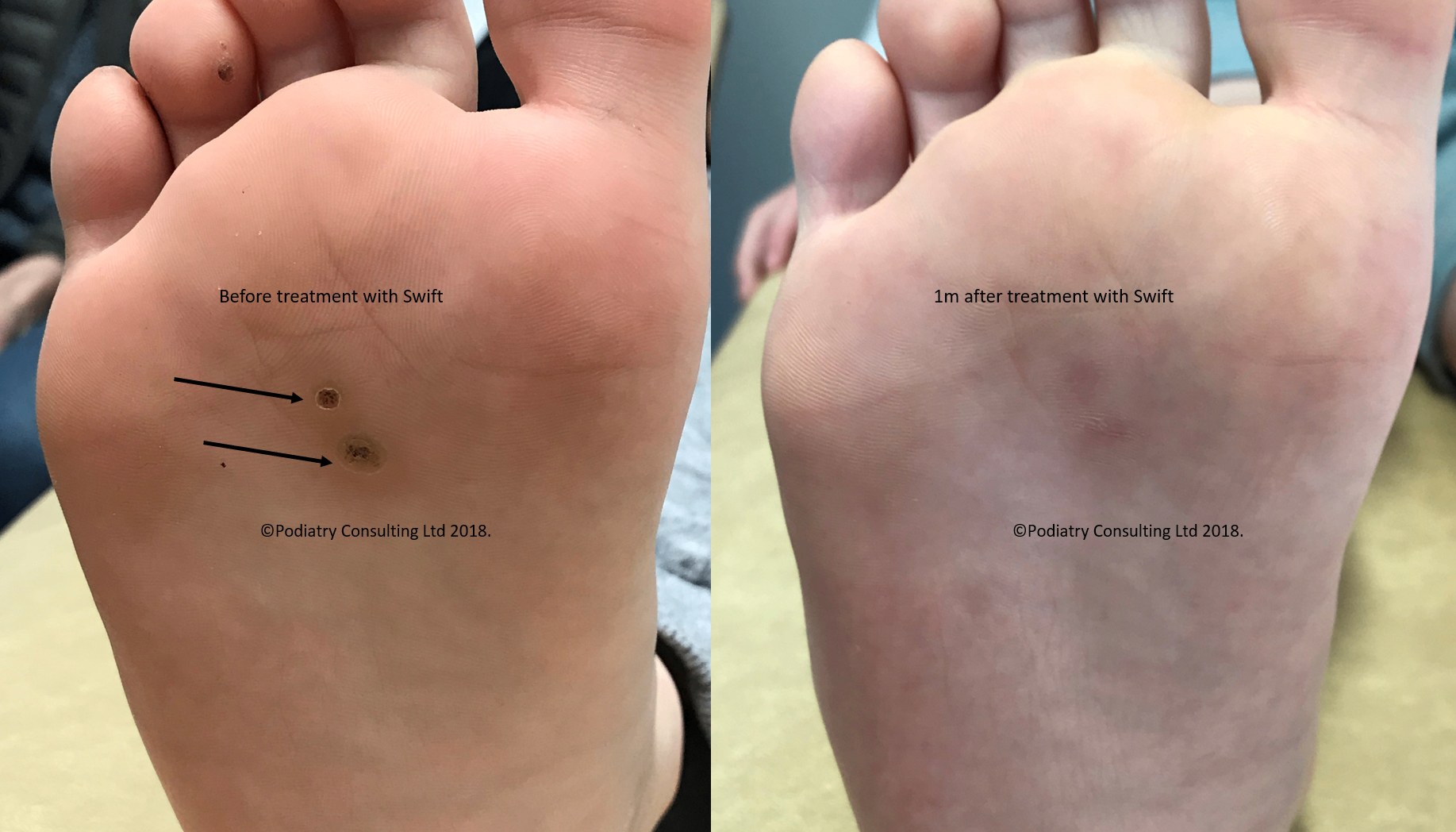
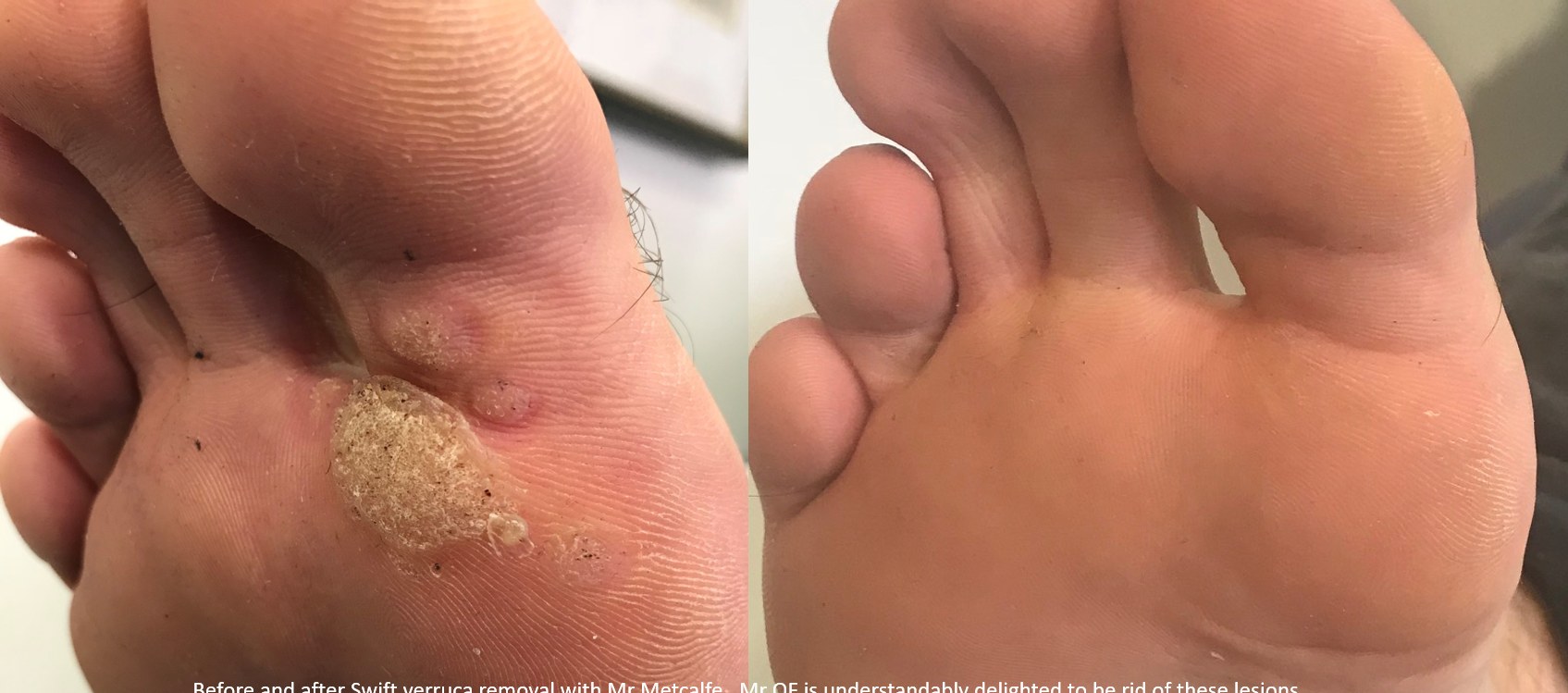
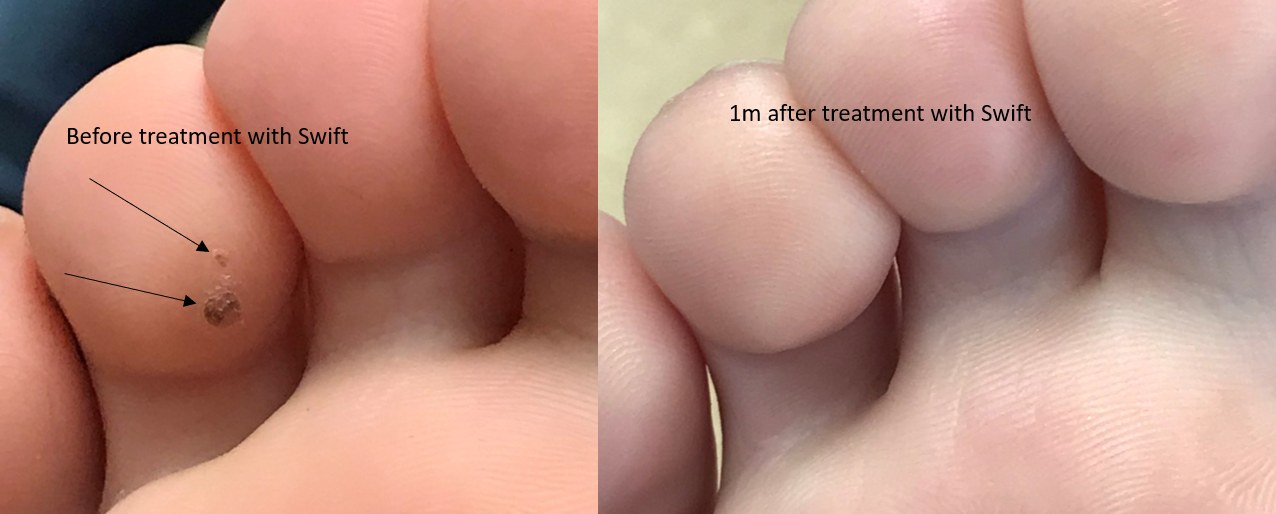
Swift microwave therapy is the most effective treatment we offer. A precisely targeted microwave pulse — delivered through a special probe applied to the skin — heats the affected tissue for a fraction of a second, prompting the immune system to recognise and clear the virus. Treatment takes seconds, is needle-free, leaves no blister or open wound, and patients walk straight out and back to normal activity. Safety data across tens of thousands of treatments makes it one of the safest verruca treatments available.
Please note: private medical insurers do not currently reimburse Swift because they will not contribute towards the cost of the disposable probes or the specialist equipment. Swift is offered on a self-pay basis only.
What patients notice
- •A rough, cauliflower-like lesion on the sole or toes, often with tiny dark spots (thrombosed capillaries)
- •Pain on direct pressure or when squeezed side-to-side
- •Interruption of the normal skin lines across the lesion
- •Single or clustered ('mosaic') lesions
- •Slow spread over months, sometimes to other family members
Why timely assessment matters
- •Persistent pain that alters gait and causes secondary joint or muscle problems
- •Spread to other sites on the foot or to other people in the household
- •Recurrent skin infection where the lesion breaks down
- •Cosmetic and psychological impact, particularly in teenagers
How we treat it
Swift microwave therapy
Mr Metcalfe reviews the treatment options at each visit, carefully reduces any overlying callus, then treats each lesion with Swift according to its presentation. Most patients require between two and four treatments, spaced from 14 days to around 4–6 weeks apart depending on how the lesion is responding. Reported clearance rates are in the region of 70–80%, even for verrucae that have failed other treatments. Unlike freezing, Swift is virtually pain-free and requires no injections — most patients describe only a brief scratch-like sensation, making it particularly well suited to children.
Cryotherapy
Freezing with liquid nitrogen. Useful in some cases but often uncomfortable, may require many sessions, and has variable outcomes for long-standing lesions.
Topical acid therapy
Salicylic acid preparations and similar keratolytics. Suitable for smaller, recent lesions and where the patient can commit to daily home care.
Sharp debridement
Careful reduction of overlying hard skin allows other treatments to work more effectively and provides symptomatic relief.
And why
Cutting or picking at the lesion at home
Why: It spreads viral particles across the skin and risks bacterial infection without clearing the underlying virus.
Walking barefoot in shared damp areas
Why: Warm, moist floors are the primary route of transmission and reinfection.
Sharing towels, socks or shoes
Why: The virus is readily transferred between family members via personal items.
Persisting with the same over-the-counter treatment for many months
Why: If a lesion has not responded within a few weeks, continuing is unlikely to help and delays effective treatment.
This page provides general information about the condition and is not a substitute for personalised clinical advice. Diagnosis and treatment planning should always follow an in-person consultation.
Discuss verrucae & plantar warts with a consultant.
Book a consultation at Spire Parkway or an online review with Mr Stuart Metcalfe.