Flexible flatfoot & HyProCure® arthroereisis.
A minimally invasive, day-case correction for children and adults with symptomatic flexible flatfoot — delivered by one of the UK's most experienced and published consultants in the technique.

What flexible flatfoot really is
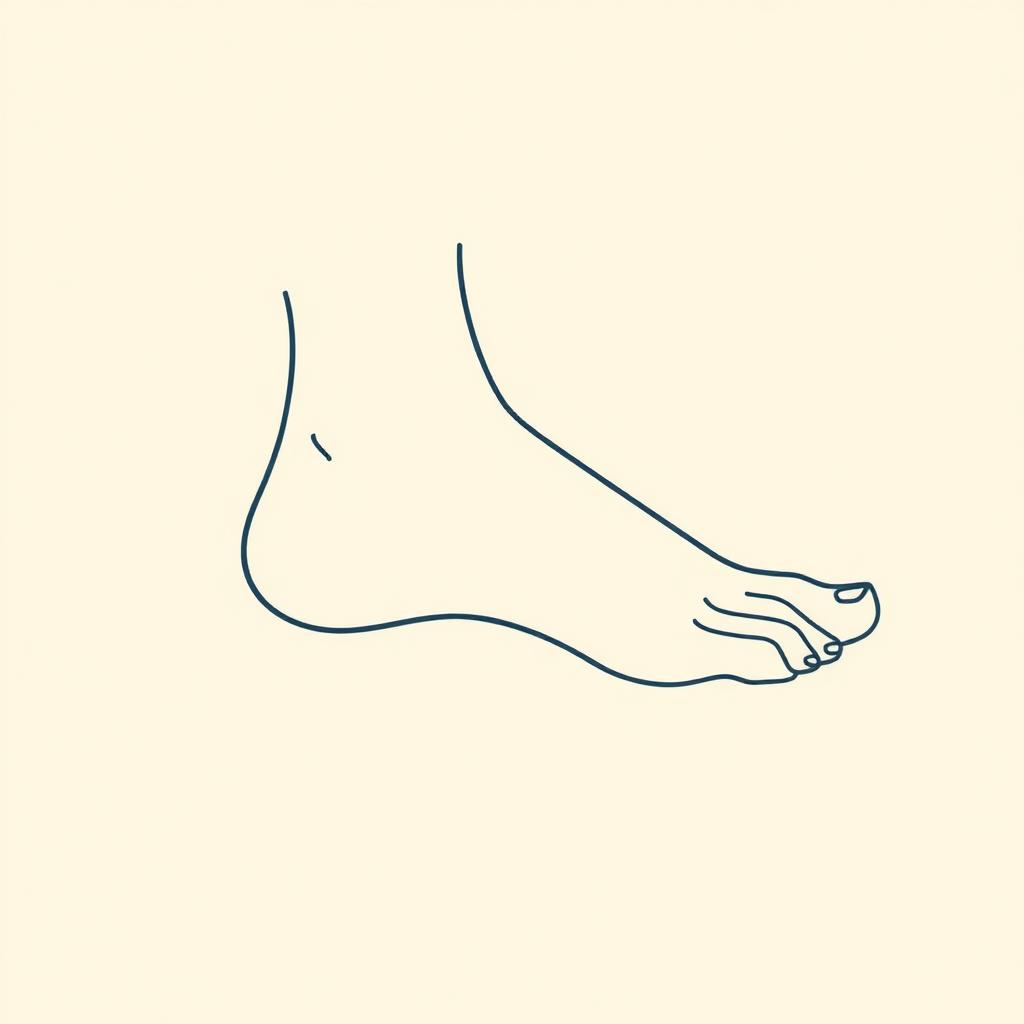
Flexible flatfoot — pes planovalgus — describes a foot in which the medial arch flattens on standing and the heel rolls outwards, but the joints themselves remain mobile. In children a modest flatfoot is entirely normal up to around age six or seven, and many will develop a healthy arch without any intervention.
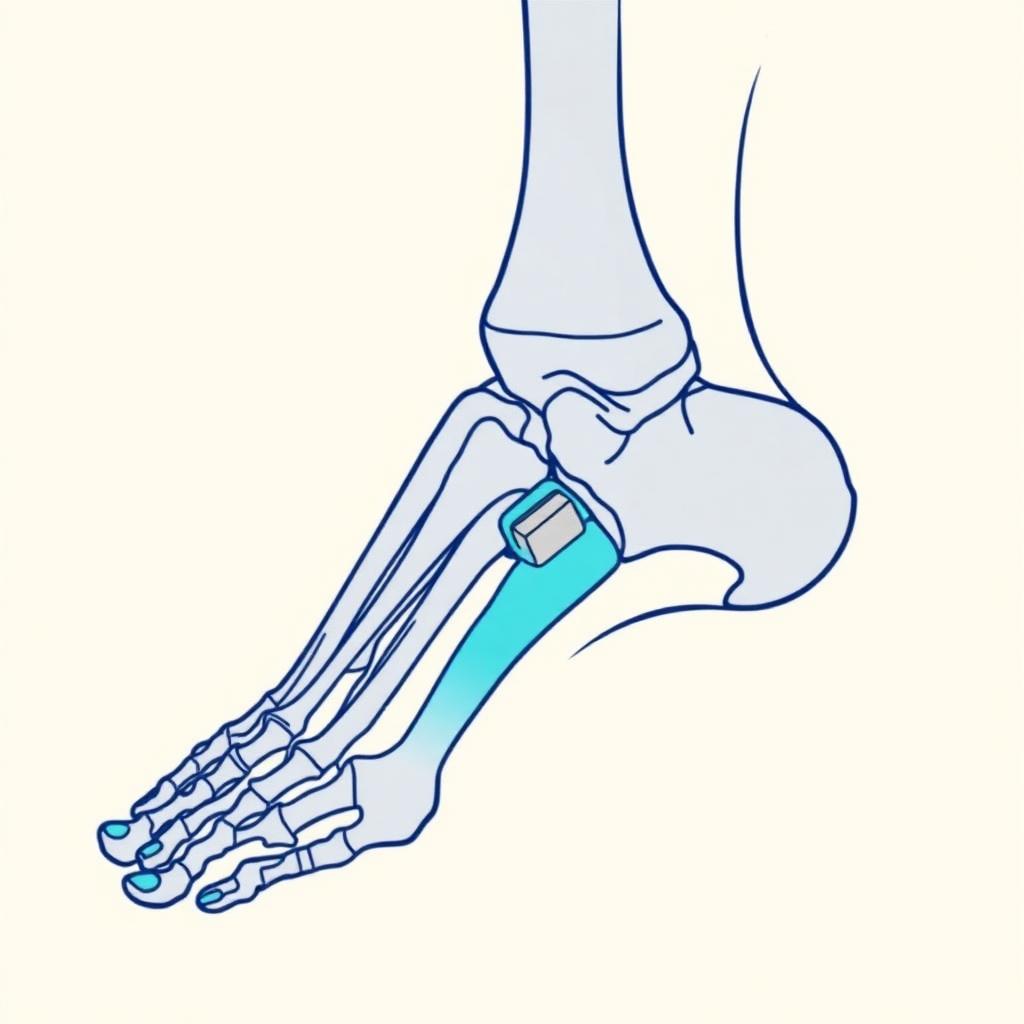
A minority, however, do not. When the deformity persists, progresses, or becomes symptomatic, it points to a mechanical fault at the subtalar joint — the joint between the ankle bone (talus) and the heel bone (calcaneus). The talus slides forward and inwards, the calcaneus tips outwards, and the whole foot loses its natural spring. Left unchecked, the same pattern in an adult drives posterior tibial tendon dysfunction and, ultimately, a rigid, arthritic flatfoot.
The good news is that a mobile subtalar joint can be mechanically re-aligned with a small, reversible implant — without cutting or fusing any bone. That procedure is subtalar arthroereisis, most commonly using the HyProCure® stent.
What patients (and parents) notice
- •Aching along the arch, ankle or shin after standing, walking or sport
- •Feet that tire quickly — children asking to be carried, adults avoiding long walks
- •Uneven shoe wear, particularly on the inner heel and inner sole
- •In-toeing, out-toeing or a rolled-in appearance to the ankles
- •Knee, hip or lower-back symptoms that track back to poor foot alignment
- •Reduced sporting performance or repeated soft-tissue injuries
Why the right assessment matters
- •Progressive stretching and failure of the tibialis posterior tendon, which can lead to adult-acquired flatfoot
- •Secondary arthritic change through the midfoot, hindfoot and ankle over time
- •Compensatory strain patterns at the knee, hip and lumbar spine
- •Persistent activity avoidance in children, with knock-on effects on confidence, weight and participation
- •Deformity that becomes rigid with age and requires far more extensive reconstructive surgery
HyProCure® subtalar arthroereisis, in plain English
Between the ankle bone and the heel bone there is a naturally occurring space called the sinus tarsi. In a flexible flatfoot that space collapses as the talus slides forward and inwards on the calcaneus. Arthroereisis re-opens that space by placing a small titanium stent inside it — a mechanical “doorstop” that blocks the abnormal collapse while preserving normal joint motion.
The operation is performed as a day-case, typically in around twenty minutes, through a small incision on the outside of the foot. There is no bone cutting and no fusion. Patients are usually up in a protective boot within days, back in normal shoes within weeks, and returning to sport progressively over the following months. Should it ever be required, the stent can be removed.
It is not a procedure for every flatfoot — and that is the point of the consultation. In experienced hands, and with honest case selection, arthroereisis can transform how a symptomatic child or adult walks, plays and works.
How we manage it
Full biomechanical assessment
Every consultation begins with a detailed gait, posture and joint-by-joint assessment — often supplemented by video capture and, where indicated, weight-bearing imaging. It is the assessment, not the procedure, that determines whether HyProCure® is the right answer.
Custom orthoses and rehabilitation
For many patients — particularly asymptomatic children with mild flexible flatfoot — a well-designed orthotic programme and targeted strengthening is the right first step. Surgery is offered only when symptoms and deformity justify it.
HyProCure® subtalar arthroereisis
A small titanium stent is placed into the natural space between the ankle and heel bones (the sinus tarsi) through a keyhole incision, blocking the abnormal collapse of the subtalar joint while preserving normal motion. It is a day-case procedure, typically around twenty minutes, with early protected weight-bearing and return to normal footwear within weeks. Crucially, the device is removable if ever needed.
Adjunctive soft-tissue work
In selected adults, arthroereisis is combined with tendon or ligament work (for example, Achilles lengthening or posterior tibial tendon repair) to give the most durable correction. This is discussed and planned individually.
Structured aftercare
Patients are supported through the full recovery pathway: post-operative boot, physiotherapy input, gait re-education, orthotic transition and staged return to sport. Reviews are led by Mr Metcalfe personally.
A UK authority on arthroereisis
Mr Stuart Metcalfe is one of the UK's most experienced consultants in subtalar arthroereisis, with three decades of consultant-level foot and ankle practice across the NHS and private sector. He is the lead author of Subtalar Joint Arthroereisis in the Management of Pediatric Flexible Flatfoot: A Critical Review of the Literature (Metcalfe SA, Bowling FL, Reeves ND — Foot & Ankle International, 2011), the international benchmark literature review of the procedure. He has taught and lectured on paediatric flatfoot and podiatric surgical technique for many years.
A less common credential, but a telling one: Mr Metcalfe elected to have this same procedure performed on his own daughter. Few endorsements of a technique are more honest than choosing it for your own family.
Every arthroereisis at Footconsultant Clinics is planned, performed and followed up by Mr Metcalfe personally — from the first biomechanical assessment through to the return-to-sport review.
Your pathway with us
- 01Consultation with Mr Metcalfe at Spire Parkway (or online), with full biomechanical and gait assessment.
- 02Discussion of imaging, conservative options and, where appropriate, the case for arthroereisis.
- 03Shared decision — including honest conversation about who this procedure is not for.
- 04Day-case surgery at Spire Parkway Hospital, Solihull.
- 05Structured aftercare: protective boot, physiotherapy, orthotic transition and staged return to activity — reviewed personally by Mr Metcalfe.
And why
Ignoring a symptomatic child in the hope they will 'grow out of it'
Why: Many children do outgrow flexible flatfoot — but persistent pain, fatigue or refusal to walk is not normal and warrants assessment. Early intervention keeps the joint flexible and the options wider.
Long-term reliance on orthotics for a progressing deformity
Why: Insoles can offload symptoms but do not correct the underlying mechanical fault. If the foot is getting worse or symptoms return every time the orthotic is removed, the pathway needs to be reviewed.
Generic 'arch support' gimmicks marketed online
Why: One-size insoles, arch bands and mail-order 'correctors' rarely address the specific pattern in your foot. They can mask symptoms while the deformity continues to develop.
Delaying assessment until the deformity is rigid
Why: Arthroereisis is designed for the flexible flatfoot. Once the joint stiffens, the reconstructive options are larger, longer and less forgiving.
Choosing a surgeon on distance alone
Why: Arthroereisis is a technically specific procedure with a real learning curve. Experience, published expertise and honest case selection matter more than travel time.
Before & after cases
Frequently asked questions
Who is HyProCure® suitable for?
Children (typically from around age 8), adolescents and adults with a genuinely flexible flatfoot deformity that is causing symptoms or measurable functional impairment. Suitability is confirmed on examination and imaging.
How long is the procedure and the recovery?
The operation itself takes around twenty minutes as a day-case. Most patients are in a protective boot for a few weeks, back into normal shoes within four to six weeks, and returning to sport progressively from around three months.
Is it reversible?
Yes. Unlike bone-cutting reconstructive surgery, the stent can be removed if it were ever necessary. That reversibility is one reason it is so well suited to growing feet.
Will it be painful?
There is expected post-operative discomfort for the first few days, well controlled with standard analgesia. Most patients are surprised at how quickly they are comfortable weight-bearing in the boot.
Can I have this on the NHS?
Mr Metcalfe holds an NHS Choose & Book list at Spire Parkway. Arthroereisis is not routinely commissioned on the NHS in every region — please see our NHS Patients page or ask at consultation.
Does Mr Metcalfe do this often?
Yes. He is one of the UK's most experienced consultants in subtalar arthroereisis and is the lead author of a peer-reviewed critical review of the procedure in the international literature.
This page provides general information about flexible flatfoot and subtalar arthroereisis and is not a substitute for personalised clinical advice. Diagnosis, suitability and treatment planning always follow an in-person consultation. HyProCure® is a registered trademark of its respective owner.
Discuss arthroereisis with Mr Metcalfe.
Book a consultation at Spire Parkway or an online review — for yourself, your child, or your patient.