Ingrown Toenails
About the condition
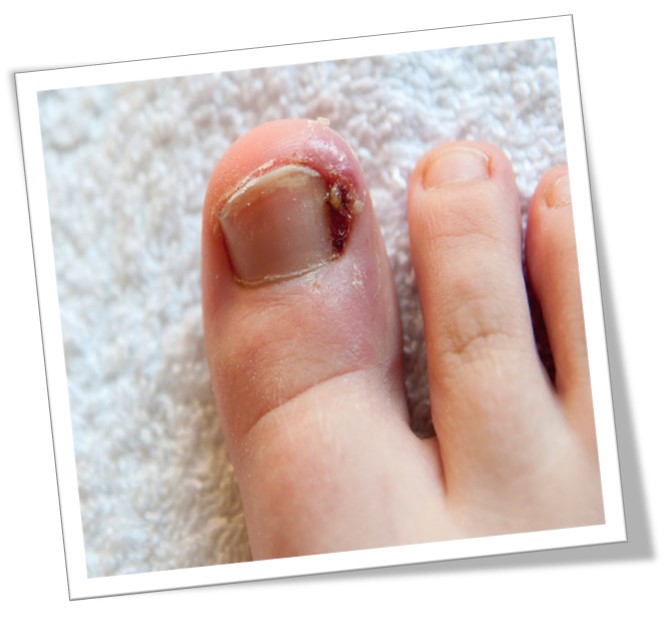
An ingrown toenail (onychocryptosis) occurs when the edge of the nail plate penetrates the surrounding skin, provoking inflammation, pain and often infection. The great toe is by far the most commonly affected.
Contributing factors include the natural curvature of the nail (involution), tight footwear, repeated microtrauma from sport, incorrect nail cutting and, in some cases, hyperhidrosis. Adolescents and young adults are the most common presenting group, but the problem occurs at any age.
Mild or first-episode cases often resolve with careful conservative care. Recurrent or severe cases are best treated definitively with a small surgical procedure under local anaesthetic.
What patients notice
- •Sharp, throbbing pain along the edge of the nail — often worse in shoes
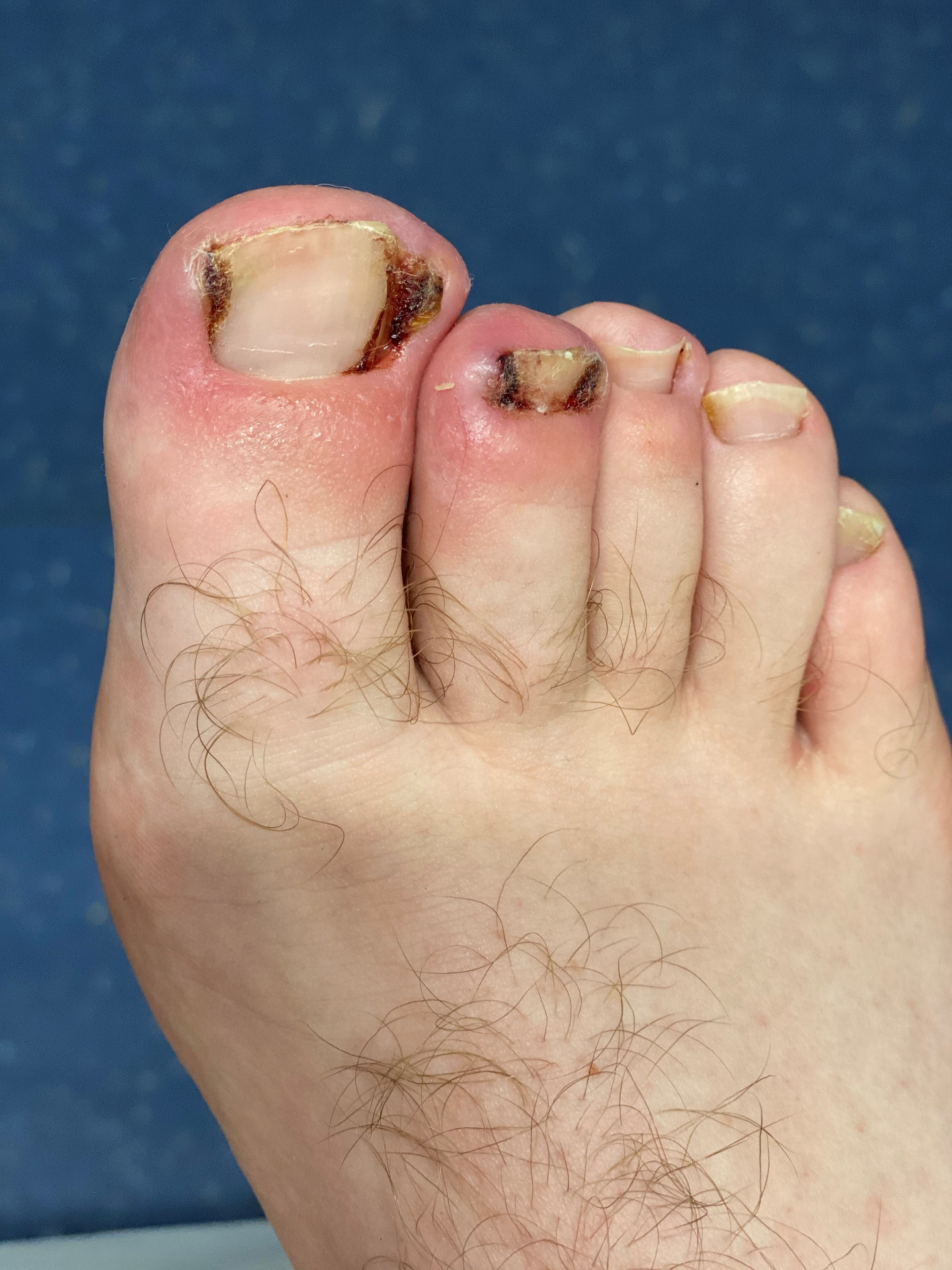
- •Redness and swelling of the nail fold
- •Bleeding or purulent discharge
- •Formation of hypergranulation tissue ('proud flesh') beside the nail
- •Difficulty wearing normal footwear or participating in sport
Why timely assessment matters
- •Recurrent bacterial infection of the nail fold (paronychia)
- •Spread of infection to deeper soft tissues, particularly in diabetes
- •Chronic granulation tissue and disfigurement of the nail
- •Repeated time off work, school or sport
- •Development of a chronic pain pattern with altered gait
How we treat it
Conservative nail care
Warm saline soaks, careful edge cleaning, appropriate footwear and antibiotic cover where infection is established. Suitable for mild or first-episode cases.
Partial nail avulsion with phenolisation
The most effective definitive treatment: the offending edge is removed under local anaesthetic and the nail matrix chemically ablated with phenol, giving a permanent cure rate above 95%.
Total nail avulsion
Reserved for severe or repeatedly deformed nails where the whole plate needs to be removed and, in some cases, the entire matrix ablated.
Post-operative care
Simple daily dressings for around two weeks. Most patients return to work within 24–48 hours and to sport within two to three weeks.
And why
Cutting the nail down the side or in a 'V'
Why: Both encourage the spike of nail growing back into the flesh — this is the single most common cause of recurrence.
Digging into the nail fold at home
Why: It introduces bacteria, injures the tissue and rarely reaches the true offending spike.
Persisting with tight footwear during a flare
Why: Continued compression prevents drainage and prolongs inflammation.
Delaying treatment when diabetic or immunocompromised
Why: What looks minor can progress rapidly to a deeper soft-tissue infection with serious consequences.
This page provides general information about the condition and is not a substitute for personalised clinical advice. Diagnosis and treatment planning should always follow an in-person consultation.
Discuss ingrown toenails with a consultant.
Book a consultation at Spire Parkway or an online review with Mr Stuart Metcalfe.